
EMMI / Thermal Testing.
Failure analysis equipment for investigating faults, defects and damage to semiconductors using scientific grade systems for Photon Emission detection, Thermal hot spot detection, and Laser scanning.
1. Photon Emission Microscope – Front and Back side
2. Infrared Thermal Microscope
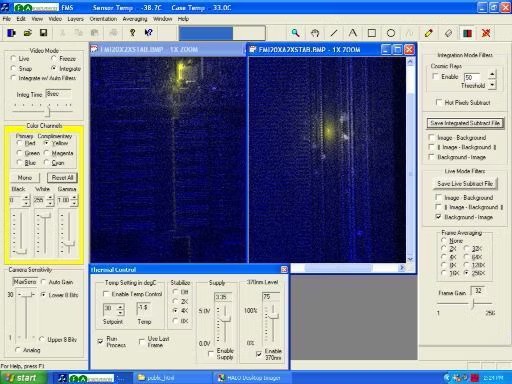
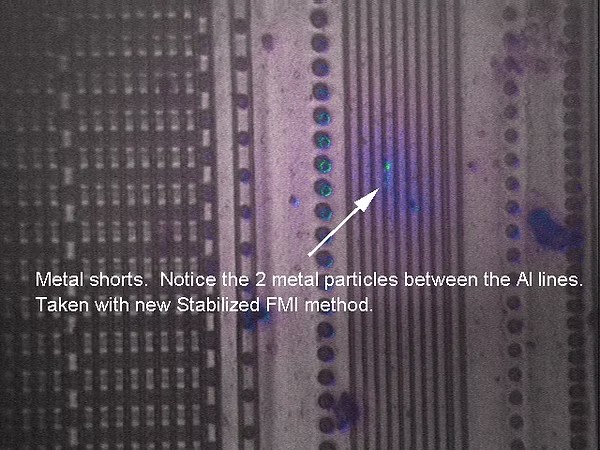
3. Fluorescent Microthermal Imaging Microscope (FMI)
Please see below for features, specifications and images

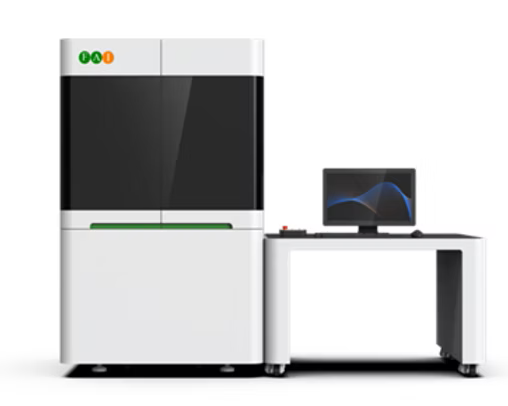
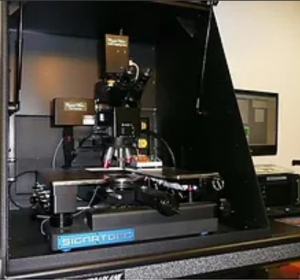
Photon Emmission Microscope – Front and Back side
Extended NIR Camera – Features & Benefits:
- Automated capture process simplifying emission capture and overlays.
- Advanced filter process for removal of hot pixel and cosmic ray noise.
- Calibration tables matched to the camera for unsurpassed sensitivity and clarity.
- Color overlays and multiple window views for emission comparison.
- Video feed out allows interface to existing probe station software.
- High Sensitivity Extended IR Sensor in the visible to NIR range.
- 13 bit Analog/ Digital hybrid enabling real-time imaging capability.
- Excellent anti-blooming characteristics.
- Selectable 8 bit readout control across 13 bit dynamic range.
- High resolution and low dark current.
- Air cooled with typical 60° C Differential resulting in -35 to -45° C at the sensor
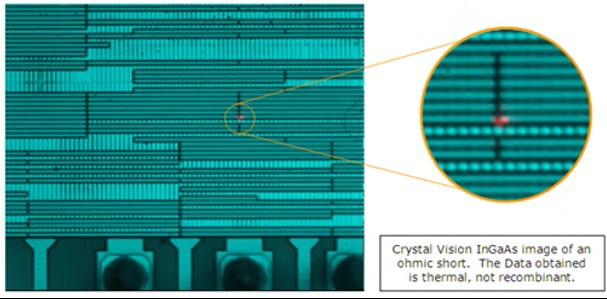
TM InGaAs Camera Specifications
- Detector: Indium Gallium Arsenide (InGaAs)
- Array Format: 320 (H) x 256 (V) Focal Plane Array
- Pixel Size: 30 x 30 microns
- Spectral Response: 900 to 1700 nanometers
- QE: 80-85%
- Optical Fill Factor: >90%
- Thermal Stabilization: Thermoelectric
- Window Material: BK-7 Optical Glass
- Digital Data Real-time, 12-bit, Parallel
- Integration Type: Snapshot Mode or Software Paced Sequential Readout
- Integration Time: Range 1 µsec to 60 minutes
- Sensitivity: NEI <1×10¹⁰ ph/cm2/sec Damage Threshold: >1 W/cm2
- Time to Initial Image: 30 sec @ 25°C ambient; ≤ 1 sec, not temperature dependent. Full stabilization <5 minutes.
- Cooling Method: Multistage TEC
- Power Dissipation: 12W typical
- Power Connector: Custom controlled via emission software
- No LN2 dewars!
- Safety Mechanisms and Interlocks Earn QFI Systems “Class 1” Laser Product Status
(Update Coming soon!)
Fluorescent Micro Thermal Imaging (FMI)
This technique involves coating a sample surface with a special Thermal sensitive fluorescent rare earth-based thin film dye that, upon exposure to UV light, Emits temperature-dependent fluorescence at 612nm.
Because of the temperature, emission/absorption characteristics, availability, and other qualities. More specifically, it has the best fit for temperature dependent
fluorescence quantum yield in the temperature range near room temperature.
Need more information on a product?
We are here to help…